
Why Galvanized Pipe Replacement Is Critical for Your Home’s Health and Safety
Galvanized pipe replacement is the essential process of removing old, corroded steel water pipes and installing modern materials like copper or PEX. If your home was built before 1960 and you’re experiencing low water pressure, discolored water, or frequent leaks, your plumbing is likely failing from the inside out.
Quick Overview of Galvanized Pipe Replacement:
- What: Replacing old zinc-coated steel pipes with new copper or PEX.
- Why: To fix internal corrosion, prevent lead contamination, stop leaks, and restore water quality.
- When: For homes over 40 years old with original plumbing or showing signs of failure.
- Cost: Typically $5,000-$30,000, depending on home size and materials.
- Timeline: Usually 1-3 days for most homes.
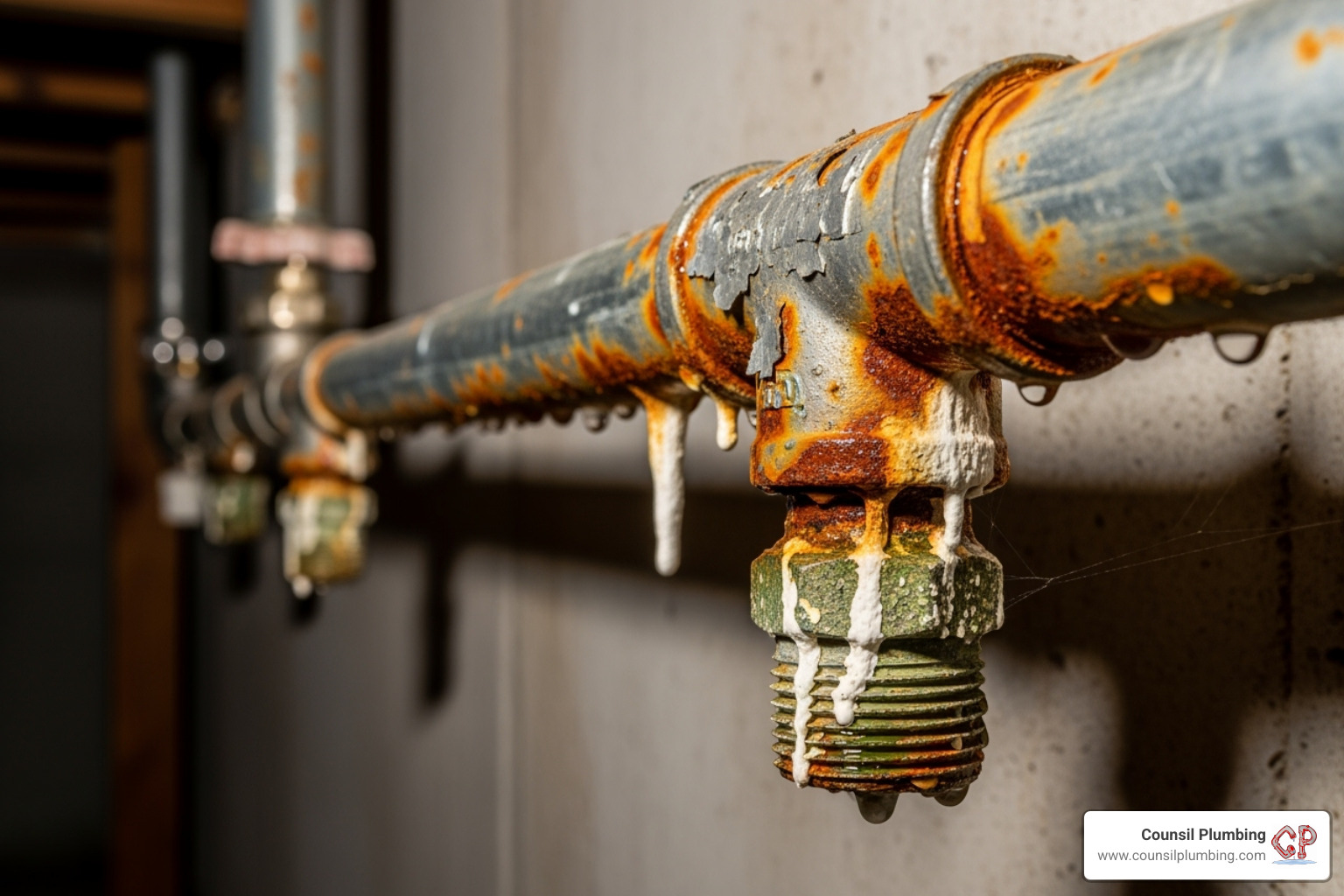
From the early 1900s to the 1960s, builders used zinc-coated steel pipes as a safer alternative to lead. However, after 40 to 70 years, this protective zinc layer wears away, causing rust, water contamination, and leaks behind your walls. Brownish water or a drop in water pressure are classic warning signs.
Fortunately, modern copper and PEX tubing offer a durable, corrosion-resistant solution. A professional repipe is a smart investment in an older home, protecting your family’s health, preventing expensive water damage, and increasing your property value.
I’m Mike Counsil, and for over 30 years, my team has helped San Jose homeowners upgrade from failing galvanized systems to reliable modern plumbing. We’ve seen how this service provides families with lasting peace of mind.
Identifying the Problem: Do You Have Aging Galvanized Pipes?
How do you know if your home has galvanized pipes? If it was built before 1960, there’s a high probability you’re living with them. While your home inspection report might mention pipe material, it’s wise to confirm for yourself. You can perform a few simple tests, or our team can provide an expert inspection. For more on maintaining older plumbing, see our Residential Plumbing in San Jose Guide.
What Are Galvanized Pipes?
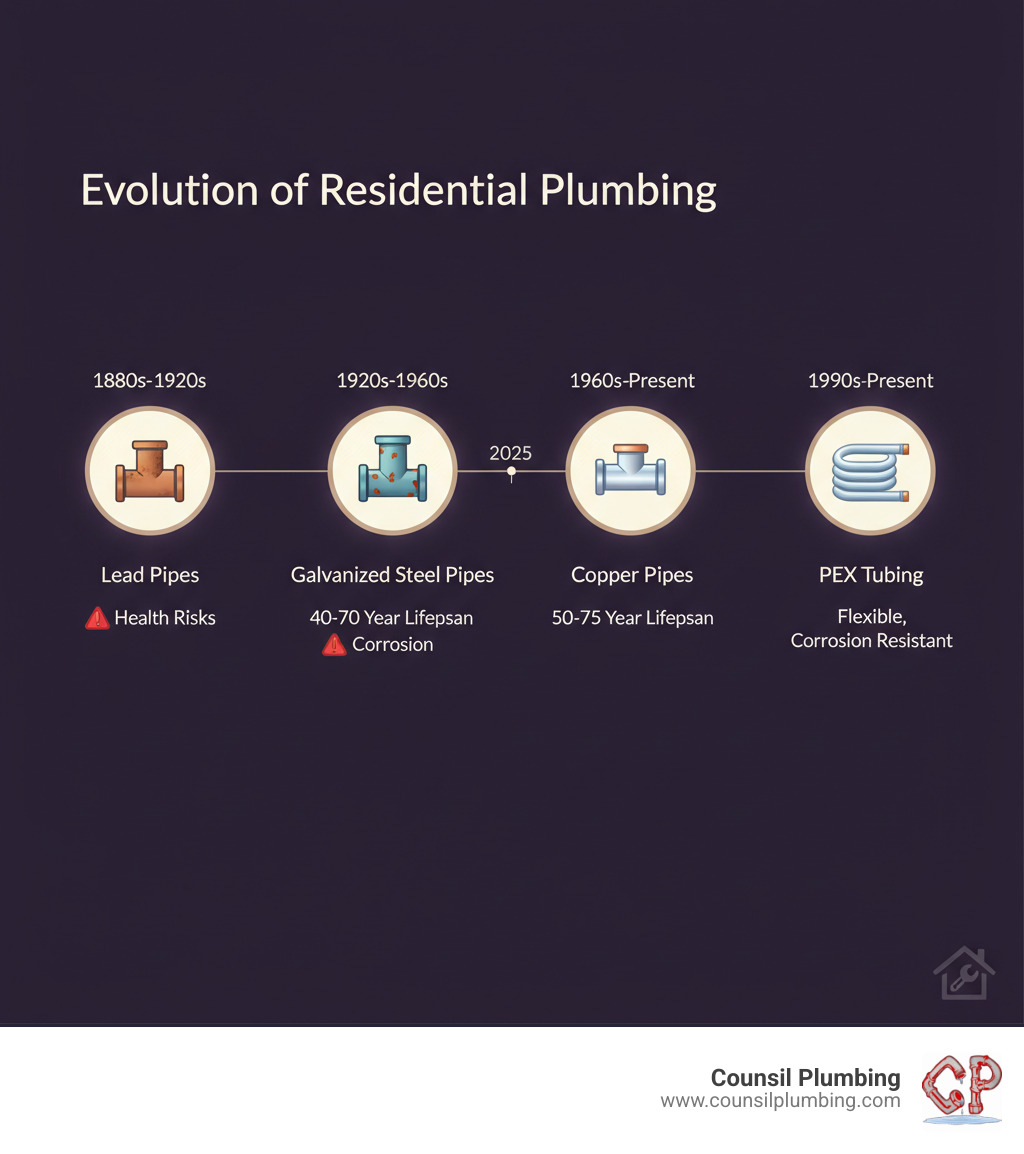
Galvanized pipes are steel pipes that have been dipped in a protective coating of molten zinc to prevent rust. This galvanization process made them the standard in American homes from the 1920s through the 1960s, replacing dangerous lead pipes.
The problem is that the zinc coating has a limited lifespan of 40 to 70 years. Once it wears away, the underlying steel is exposed to water and begins to corrode. Most homes built before 1960 still have their original galvanized pipes, meaning they are operating well past their intended service life and are at high risk of failure.
How to Tell if Your Home Has Galvanized Pipes
You can likely identify galvanized pipes yourself in just a few minutes. Here’s a simple guide:
First, find an area of exposed pipe in your basement, crawl space, or under a sink. Look for a pipe with a silver-gray color. As they age, these pipes often become duller and may have a brownish tint from surface rust.
The Scratch Test: Use a screwdriver or a coin to scratch the pipe’s surface. If it reveals a silvery-gray metallic color, it’s galvanized steel. In contrast, copper looks like a penny, and plastic is typically white or ivory.
The Magnet Test: Place a strong magnet on the pipe. If it sticks, you have galvanized steel. Magnets do not stick to copper, plastic, or lead pipes.
Check the Fittings: Galvanized pipes are connected with threaded fittings, which look like screw-like grooves at the joints. Copper pipes have smooth, soldered joints, while PEX uses clamps or crimp rings.
If you’re still unsure after these tests, our team can quickly identify your pipe material during an inspection. We serve homeowners throughout the South Bay, including Los Gatos. Our guide to Residential Plumbing in Los Gatos, CA offers more local insights. Knowing your pipe material is the first step toward making informed decisions about your home’s plumbing.
The Ticking Clock: Why Old Galvanized Pipes Are a Major Concern
The uncomfortable truth about aging galvanized pipes is that they deteriorate from the inside out. This internal corrosion is a ticking time bomb in your walls, and waiting for it to fail will only lead to more expensive and disruptive repairs. The danger isn’t just an inconvenience; it’s a serious threat to your home, health, and finances. Many insurance policies won’t cover water damage from pipes that are past their useful life. Learn how we can help protect your home on our Water Line Services page.
Common Problems and Consequences of Not Replacing Pipes
Failing galvanized pipes create problems that affect your daily life. Ignoring them will only make things worse.
- Low water pressure: This is often the first sign. Rust and mineral deposits build up inside the pipes, restricting water flow to a trickle.
- Discolored water: If your water runs brown, yellow, or red, it’s because rust is breaking loose from inside the pipes. This gives the water a metallic taste and smell.
- Rust stains: The iron particles in the water will leave stubborn stains on your sinks, tubs, and toilets.
- Leaks and pinholes: As pipes corrode, they develop small leaks, often hidden behind walls or under floors. By the time you notice water damage, significant structural harm may have already occurred.
- Mold growth: The moisture from hidden leaks creates a perfect breeding ground for mold, leading to health issues and costly remediation.
- Clogs and appliance damage: Rust buildup causes frequent clogs and sends sediment into your water heater and appliances, shortening their lifespan.
Postponing galvanized pipe replacement doesn’t save money; it guarantees you’ll spend more on emergency repairs later.
The Hidden Health Risks: Lead Contamination in Your Water
Beyond property damage, aging galvanized pipes pose a serious health risk. The zinc coating on many older pipes (especially pre-1960s) contained lead impurities. As this zinc layer corrodes, lead can leach into your drinking water.
Furthermore, if galvanized pipes were ever connected to a lead service line, they can trap lead particles that may later be released into your water. This is especially dangerous for children, as lead exposure can cause severe and permanent developmental and health problems.
Since you can’t see, smell, or taste lead in water, testing is the only way to know if your water is contaminated. If your home was built before 1970 and has galvanized pipes, we strongly recommend having your water tested. Protecting your family’s health is our top priority. Learn more on our page about How Local Plumbing Experts Help Protect Older Homes.
The Solution: Your Guide to Galvanized Pipe Replacement
The good news is that you don’t have to live with the problems of failing galvanized pipes. Galvanized pipe replacement, or repiping, is a permanent solution that provides clean, reliable water for decades. While it’s a significant upgrade, it’s one of the smartest investments you can make in your home’s future. Our team is ready to guide you through our General Plumbing services.
Modern Piping Alternatives: PEX vs. Copper
When replacing galvanized pipes, your two best options are PEX and copper. Both are far superior to galvanized steel, but they have different strengths. The right choice depends on your home, budget, and priorities.
| Feature | PEX (Cross-linked Polyethylene) | Copper |
|---|---|---|
| Durability | Very durable, flexible, and resistant to bursting from freezing. | Extremely durable, rigid, and long-lasting (50-75 years lifespan). |
| Cost | Generally lower material and installation cost. | Higher material and installation cost. |
| Flexibility | Highly flexible, can be snaked through walls, fewer fittings. | Rigid, requires more fittings and soldering for turns. |
| Installation Ease | Faster and less intrusive installation, no soldering. | More labor-intensive, requires soldering and specialized tools. |
| Corrosion Resist. | Completely corrosion-resistant, unaffected by acidic water, chlorine, and scale. | Corrosion-resistant, but can corrode in very acidic water. |
| Health & Safety | Lead-free, doesn’t leach chemicals into water. | Naturally anti-microbial, doesn’t leach chemicals. |
| Noise | Can be noisier with water flow due to flexibility. | Generally quieter due to rigidity. |
PEX tubing is a popular choice for its flexibility, which allows for faster, less invasive installation with fewer connections. It’s corrosion-proof, lead-free, and more resistant to bursting if water freezes. PEX is also typically the more budget-friendly option.
Copper piping is the traditional gold standard, known for its exceptional durability and a proven lifespan of 50-75+ years. It is rigid, naturally anti-microbial, and has a premium feel. While more labor-intensive and costly, it’s a fantastic long-term investment.
We’ll help you decide which material is best for your home during our consultation.
The Professional Galvanized Pipe Replacement Process: What to Expect
A whole-house galvanized pipe replacement is a smoother process than you might think. Our experienced team minimizes disruption and completes the job efficiently.
- Inspection and Planning: We start with a thorough assessment of your plumbing system to create a clear plan and provide a fixed-price quote with no surprises.
- Home Protection: Our crew lays down protective coverings to safeguard your floors and furniture before any work begins.
- Old Pipe Removal/Bypass: We either remove old galvanized pipes or bypass them, running new lines directly to your fixtures with minimal wall openings.
- New Pipe Installation: Our skilled plumbers install your new PEX or copper piping, ensuring every connection is secure and up to code. This work is typically completed in just 1-3 days.
- Wall Patching and Cleanup: We patch any openings made in your walls, leaving them ready for paint, and conduct a thorough cleanup of our work area.
- Final Inspection: We rigorously test the new system for leaks and proper pressure, coordinating any required local inspections to ensure full compliance. For more details, you can review this helpful guide: More info about the replacement process.
Our focus is on professionalism, efficiency, and restoring your water service with minimal interruption to your life.
Understanding the Investment: Costs and Benefits of Repiping
Let’s be honest: galvanized pipe replacement is a significant expense. However, it’s not just a repair—it’s an investment in your family’s health, your home’s safety, and your peace of mind. By upgrading, you’re increasing your home’s value, eliminating the risk of a catastrophic leak, ensuring your water is free of rust and lead, and finally getting rid of frustratingly low water pressure.
The alternative is to hope your aging pipes hold out, a gamble that often ends with emergency calls and repair bills that far exceed the cost of a planned repipe. For a look at how proper plumbing protects your investment, see What Do Comprehensive Plumbing Solutions Include?.
Estimating the Cost of Galvanized Pipe Replacement
The cost of a repipe varies, but we can outline the main factors that influence the price.
- Home Size: A larger home requires more piping and labor.
- Number of Fixtures: Each sink, bathroom, and appliance hookup adds to the project’s complexity.
- Pipe Accessibility: Pipes in an open basement are easier to access than those hidden behind finished walls or tile, which affects labor time.
- Material Choice: PEX is generally more affordable than copper in both materials and installation labor.
In the South Bay Area, most homeowners can expect to invest between $5,000 and $20,000 for a whole-house repipe. Smaller projects may start lower, while larger, more complex homes can exceed $30,000. We provide a transparent, fixed-price quote after our initial inspection, so you’ll know the exact cost upfront.
Why DIY is Risky and Professional Installation is Key
While DIY is tempting for saving money, galvanized pipe replacement is a project best left to professionals. Here’s why:
- Specialized Tools & Codes: Repiping requires expensive tools and a deep understanding of local building codes to ensure a safe, legal installation.
- Risk of Water Damage: A single improper connection can cause a slow leak that leads to devastating water damage, mold, and structural rot. Your insurance likely won’t cover damage from faulty DIY work.
- Technical Expertise: Professionals know how to avoid issues like galvanic corrosion, which occurs when incompatible metals are connected improperly and can cause new leaks to form quickly.
When you hire Counsil Plumbing, you’re buying warranty protection, our 30+ years of experience, and our 100% satisfaction guarantee. With 800+ five-star reviews and 24/7 emergency service, we stand behind our work. Think of it as surgery for your home—it’s a job that demands an expert.
Frequently Asked Questions about Galvanized Pipe Replacement
We’ve guided hundreds of South Bay homeowners through the repiping process and have answered every question imaginable. Here are the most common ones we hear about galvanized pipe replacement:
What is the typical lifespan of galvanized pipes?
Most galvanized pipes have a lifespan of 40 to 70 years. However, factors like poor initial installation or hard water (common in the South Bay) can cause them to fail in as little as 30-40 years. If your home was built before 1970 and has its original plumbing, the pipes are living on borrowed time. Failure is a matter of when, not if.
Can I replace just one section of galvanized pipe?
While we can technically replace a single leaking section, it’s a poor long-term strategy. When one part of the system fails, it’s a clear sign that the rest is in similar condition. A partial fix is like putting a small patch on a worn-out tire.
Furthermore, connecting new pipe materials to old galvanized steel can cause galvanic corrosion, which accelerates rust at the connection point and creates new leaks. A complete galvanized pipe replacement is the only way to solve the problem permanently and cost-effectively, preventing future emergency calls and hidden water damage.
How long does a whole-house repipe take?
Most homeowners are surprised by how quickly we can complete a repipe. For an average-sized home, the actual plumbing installation takes just one to three days. Our experienced crews work efficiently to minimize disruption.
Your water will be shut off for parts of the day, but we schedule this carefully and communicate the timeline clearly so you can plan accordingly. Most families can remain in their homes during the process. After the plumbing is done, wall patching and cleanup typically take another day or two. The entire project is usually finished within a week, giving you a plumbing system that will last for decades.
Conclusion: Secure Your Home’s Future with a Plumbing Upgrade
If you’ve read this far, you know that galvanized pipe replacement is a crucial investment in your home’s health, safety, and value. You’re not just fixing a problem; you’re gaining clear water, strong pressure, and the peace of mind that comes from eliminating the risk of leaks and lead contamination.
This upgrade protects your home from costly water damage and pays dividends for decades. Here at Counsil Plumbing, we’ve helped homeowners make this smart investment for over 30 years across San Jose, Cupertino, Los Altos, Los Gatos, Saratoga, Sunnyvale, and the entire South Bay. Our reputation is built on treating every home like our own, backed by 800+ five-star reviews, 24/7 emergency service, and a 100% satisfaction guarantee.
Don’t live with rusty water or the worry of a burst pipe. Our team is ready to provide a professional installation that will serve your family for generations.
Ready to say goodbye to your aging galvanized pipes? Schedule your professional residential repiping service today and give your home the upgrade it deserves.