ClickCease

Unclogging the Big One: Hydrojetting for Sewer Lines Explained

When Your Sewer Lines Need the Ultimate Clean

Hydrojetting sewer lines is a high-pressure water cleaning method that removes stubborn clogs, grease buildup, tree roots, and debris from your pipes using water pressurized up to 4,000 PSI. Here’s what you need to know:

Key Applications:

  • Heavy grease and FOG buildup – especially in kitchen lines
  • Tree root infiltration – cutting through and removing invasive roots
  • Recurring clogs – when snaking only provides temporary relief
  • Preventative maintenance – thorough cleaning every 18-24 months
  • Multiple slow drains – indicating main line blockages

How It Works:

  1. Camera inspection locates blockages and assesses pipe condition
  2. High-pressure water jets scour pipe walls clean (360-degree cleaning)
  3. Debris flushes completely out of the system
  4. Final inspection confirms thorough cleaning

Anyone who’s dealt with recurring drain problems knows how frustrating it can be. As one homeowner put it: “If you’re constantly dealing with stubborn clogs, it may be time to call in the professionals.”

Unlike traditional snaking that only pokes a hole through clogs, hydrojetting completely cleans pipe walls and removes the buildup that causes future blockages. This makes it far more effective for tough obstructions like tree roots, hardened grease, and mineral scale.

I’m Mike Counsil, and in my 30+ years of plumbing experience, I’ve seen hydrojetting sewer lines transform problem pipes that seemed destined for replacement. This powerful cleaning method has become one of our most effective tools for giving homeowners long-lasting solutions to their worst drain problems.

What is Hydrojetting and How Does It Work?

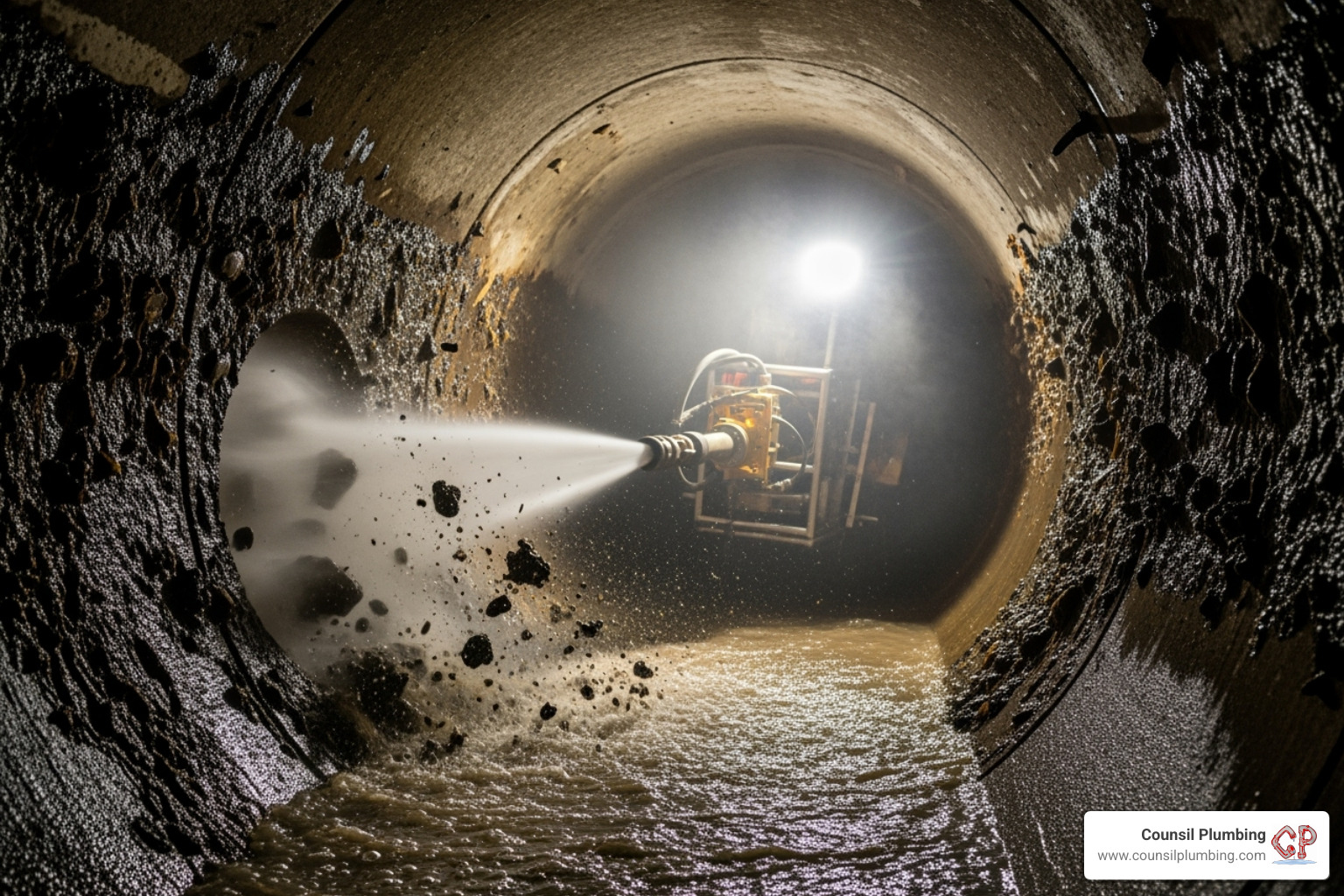
Think of the most powerful pressure washer you’ve ever seen, then imagine it’s been boostd for the toughest job in plumbing. That’s hydrojetting sewer lines in a nutshell – and it’s honestly pretty amazing to watch in action.

This advanced cleaning method uses high-pressure water blasting at 2,000 to 4,000 PSI to tackle everything your pipes can throw at it. We’re talking about years of accumulated grease, stubborn mineral deposits, and even those pesky tree roots that somehow always find their way into your sewer lines.

But here’s what makes hydrojetting special: it doesn’t just poke a hole through the mess like traditional methods. The pressurized water scours every inch of your pipe walls, removing buildup and restoring your pipes to their original diameter. It’s like giving your sewer lines a complete spa treatment.

What I love most about this method is that it’s completely eco-friendly. No harsh chemicals that could damage your pipes or harm the environment – just pure water doing all the heavy lifting. It’s powerful enough to handle the nastiest clogs but gentle on Mother Earth.

For homeowners who want to understand the technical details, this Beginners Guide to Hydro Jetting breaks down everything you need to know about the process.

The Step-by-Step Process for Hydrojetting Sewer Lines

When we arrive at your home for hydrojetting sewer lines, we follow a careful three-step process. No shortcuts, no guesswork – just professional service that gets results.

plumber performing a video camera inspection of a sewer line - hydrojetting sewer lines

Step 1: Camera Inspection

Before we blast anything with high-pressure water, we need to see what we’re dealing with. We start by sending a high-resolution video camera down your sewer line to get the full picture.

This camera inspection serves two crucial purposes. First, it helps us locate exactly where the blockage is and what’s causing it – whether it’s a grease buildup, tree roots, or something else entirely. Second, and just as important, we’re assessing your pipe condition to make sure they can handle the pressure.

If we spot cracks, severe damage, or pipes that look too fragile for hydrojetting, we’ll discuss alternative solutions with you. Safety first, always.

Step 2: High-Pressure Jetting

Once we know your pipes are ready, it’s time for the main event. We use specialized nozzles designed for different types of blockages – some blast forward to break through tough clogs, while others spray backward to clean the walls and flush everything out.

The beauty of professional hydrojetting is the control we have over water pressure up to 4,000 PSI. We adjust it based on your specific pipe material and the severity of the blockage. This precision ensures we clear your lines completely while keeping your pipes safe.

As we work, the pressurized water is flushing debris out of your system, leaving behind clean, free-flowing pipes.

Step 3: Final Inspection

We’re not done until we’re sure the job is perfect. After hydrojetting, we run another camera inspection to verify that every bit of blockage is gone and your pipe walls are spotless.

This final check gives both you and us confidence that your sewer lines are flowing like new again. It’s our way of standing behind our work and ensuring your complete satisfaction.

For more details about how we handle complex plumbing challenges, check out our comprehensive plumbing solutions.

Hydrojetting vs. Traditional Snaking: A Clear Comparison

When your drain backs up, you’ve probably heard of the trusty plumber’s snake (also called a drain auger). It’s been around forever, and for good reason – it works for simple clogs. But when you’re dealing with serious sewer line problems, hydrojetting sewer lines offers a completely different approach that often delivers far better results.

Here’s the thing about snaking: it’s like using a pencil to poke a hole through a wall of mud. The snake mechanically breaks through whatever’s blocking your pipe, creating a small opening for water to flow again. But all that gunk – the grease, tree roots, mineral buildup, and sludge – stays right there on your pipe walls, just waiting to catch the next bit of debris that comes along.

Hydrojetting takes a totally different approach. Instead of just poking through the problem, it blasts everything away with high-pressure water. Think of it as power washing your pipes from the inside out. Every bit of buildup gets scoured off the walls and flushed completely out of your system.

The difference in effectiveness is pretty dramatic. While snaking might get your water flowing again temporarily, hydrojetting actually solves the underlying problem. The longevity of results speaks for itself – snaked drains often clog again within weeks or months, while hydrojetted lines can stay clear for years.

For pipe health, hydrojetting is actually restorative. It brings your pipes back closer to their original diameter and smooth interior surface. When done by professionals who adjust the pressure correctly, it’s safe for most pipe materials. Snaking, on the other hand, can sometimes scratch older pipes if used too aggressively.

From a cost-effectiveness standpoint, hydrojetting might cost more upfront, but you’ll save money in the long run by avoiding repeated service calls and preventing major pipe damage.

Feature Traditional Snaking Hydrojetting
Clog Type Best for simple, localized blockages (hair, small objects) Effective for tough clogs (grease, roots, scale, sludge)
Pipe Cleaning Pokes a hole through the clog; leaves residue behind Scours pipe walls 360 degrees; removes all buildup
Prevention Short-term relief; clogs often recur quickly Long-term solution; prevents future clogs by cleaning pipe walls
Pipe Health Can sometimes scratch or damage older pipes with aggressive use Safe for most pipes when pressure is adjusted by a professional; restores pipe diameter

Why Hydrojetting is More Than Just Unclogging

When we talk about hydrojetting sewer lines, we’re really talking about pipe restoration, not just unclogging. It’s the difference between putting a band-aid on a problem and actually healing it.

The magic happens in that complete, 360-degree cleaning action. Picture your pipes after years of use – they’re coated with a sticky film of grease, soap residue, mineral deposits, and who knows what else. When you snake a drain, you’re essentially creating a small tunnel through all that buildup. The buildup is still there, acting like flypaper for the next batch of debris that comes down your drain.

Hydrojetting removes all those soft deposits that snaking leaves behind. The high-pressure water scours every inch of your pipe’s interior surface, washing away everything that could contribute to future blockages. Your pipes end up smooth and clean, making it much harder for new debris to stick and accumulate.

This is why hydrojetting prevents future clogs so effectively. When your pipes are truly clean, water flows freely, and debris moves through instead of building up. It’s like the difference between trying to slide down a muddy slide versus a clean, wet one – everything just flows better.

That’s the real value of hydrojetting – it’s not just fixing today’s problem, it’s preventing tomorrow’s headaches. Your pipes work better, last longer, and give you the peace of mind that comes with knowing your plumbing system is in great shape.

The Complete Guide to Hydrojetting Sewer Lines: When It’s Needed and What It Solves

Your home’s plumbing system has a way of communicating with you—and when it comes to sewer line problems, those messages are usually pretty hard to ignore. The question isn’t whether you’ll eventually need professional help, but rather when to recognize that hydrojetting sewer lines might be the solution you’ve been looking for.

The most obvious red flag is recurring clogs that just won’t stay fixed. You know the drill: you call a plumber, they clear the blockage, and within weeks or months, you’re dealing with the same frustrating problem all over again. This cycle usually means there’s a deeper issue in your main sewer line that simple snaking can’t address.

When you start noticing multiple slow drains throughout your home—your kitchen sink backing up while your shower drains sluggishly—that’s your plumbing system telling you the problem goes beyond individual fixtures. The main sewer line is likely dealing with significant buildup that’s affecting your entire system’s ability to drain properly.

Foul sewage odors are another unmistakable sign that something’s seriously wrong. These smells don’t just appear out of nowhere; they’re usually the result of trapped wastewater and escaping gases caused by blockages in your sewer line. Beyond being unpleasant, these odors can indicate potential health concerns for your family.

The most urgent warning sign is sewage backups. When wastewater starts coming back up through your drains, toilets, or tubs, your sewer line has reached its breaking point and can no longer carry waste away from your home. This isn’t just inconvenient—it’s a plumbing emergency that requires immediate professional intervention.

The smart approach is addressing these warning signs before they escalate into costly emergencies. Regular maintenance and inspections can catch problems while they’re still manageable. That’s why we always recommend learning about Why Annual Plumbing Inspections Save You Money.

What Types of Clogs Require Hydrojetting Sewer Lines?

Not all clogs are created equal, and hydrojetting sewer lines truly shines when dealing with the tough, stubborn blockages that make traditional methods throw in the towel. Understanding what types of problems call for this powerful solution can help you make informed decisions about your plumbing maintenance.

Heavy grease buildup tops the list of hydrojetting’s greatest hits. Kitchen lines, especially in busy households or commercial kitchens, accumulate layers of fats, oils, and grease (FOG) that congeal into thick, sticky masses. These greasy blockages laugh in the face of traditional snaking—you might poke a hole through them, but they’ll be back stronger than ever. Hydrojetting actually melts and washes away this stubborn residue completely.

Invasive tree roots present another challenge that hydrojetting handles beautifully. Trees are naturally drawn to the consistent water source your sewer lines provide, and their roots can infiltrate through the tiniest cracks or loose joints. Once inside, they grow into dense, tangled masses that trap debris and create serious blockages. The high-pressure water can cut through these root systems and flush them completely out of your pipes.

Hard scale and mineral deposits build up slowly over time, but they can seriously impact your pipe’s performance. These crusty deposits form from minerals in your water supply and gradually reduce your pipe’s diameter. While they might not cause immediate blockages, they create rough surfaces that catch debris and lead to bigger problems. Hydrojetting breaks down these hardened deposits and restores your pipes to their original capacity.

Sludge and sediment accumulation is particularly common in areas with low water flow. Dirt, sand, and other fine particles settle at the bottom of pipes and can become thick, dense masses that significantly hinder drainage. This heavy material is exactly what hydrojetting was designed to handle—the powerful water pressure easily flushes out these stubborn sediments.

Sometimes foreign objects and debris find their way into sewer systems, whether it’s non-flushable items that shouldn’t have been flushed or construction materials like grout and pebbles that accidentally entered the system during home improvements.

Here’s a sobering fact that might surprise you: Almost half of sewer overflows are caused by FOG. This statistic really drives home how crucial proper cleaning methods like hydrojetting are for maintaining healthy sewer systems and preventing widespread problems that affect entire communities.

Is Hydrojetting Safe for My Pipes? Risks and Considerations

Here’s the honest truth: when you hear about hydrojetting sewer lines using water pressure up to 4,000 PSI, it’s natural to wonder if this powerful cleaning method might damage your pipes. I get this question almost daily, and it’s a smart concern to have.

The reality is that hydrojetting is remarkably safe when performed by experienced professionals who know what they’re doing. However, like using a chainsaw to trim a delicate rose bush, it’s all about having the right expertise and approach. The key factors that determine safety are your pipe material, pipe age, and most importantly, getting a proper professional assessment before we start blasting water through your system.

Modern pipes made of PVC handle hydrojetting beautifully – they’re designed to withstand significant pressure and won’t be damaged by the process. Cast iron pipes in good condition also respond well to hydrojetting, often looking decades younger after a thorough cleaning. The challenge comes with older materials and pipes that have seen better days.

Clay pipes, which were commonly used in older homes, can be more fragile and prone to cracking under high pressure. Similarly, very old cast iron pipes that have been weakened by years of corrosion need special consideration. If your pipes already have hairline cracks or weak spots, the intense water pressure could potentially turn a small problem into a bigger one.

This is exactly why we never take a “one-size-fits-all” approach to hydrojetting. Every home and every pipe system is different, and what works safely for your neighbor might not be the right solution for your plumbing.

The Importance of a Pre-Jetting Camera Inspection

This is where our camera inspection becomes your best friend – and your pipes’ guardian angel. Before we even think about firing up the hydrojetting equipment, we’re going to take a thorough look inside your pipes with our high-resolution camera.

Think of it as getting an X-ray before surgery. We need to see exactly what we’re working with before we can safely and effectively solve your problem. During this inspection, we’re identifying cracks that might not be visible from the outside, assessing pipe integrity to make sure your system can handle the pressure, and looking for any signs that hydrojetting might not be the best approach.

Sometimes, what we find during the camera inspection changes our entire game plan. If we find that your pipes are too fragile or compromised, we’ll be upfront about it and recommend alternative solutions. Maybe traditional snaking would be safer for your particular situation, or perhaps it’s time to discuss pipe repair or replacement options.

The beautiful thing about this approach is that it prevents damage to fragile pipes before it happens. We’d rather tell you honestly that hydrojetting isn’t right for your system than cause expensive damage by proceeding blindly. When we do find that your pipes are perfect candidates for hydrojetting, you can have confidence that we’re moving forward with the safest, most effective approach possible.

This careful evaluation process is part of what makes professional hydrojetting so much safer than attempting DIY solutions or working with inexperienced technicians. For more information on how we approach all aspects of your plumbing needs with this same level of care and expertise, check out More info about our general plumbing services.

Frequently Asked Questions about Hydrojetting

When homeowners first hear about hydrojetting sewer lines, they naturally have questions. After three decades in the plumbing business, I’ve heard them all! Let me share the answers to the most common concerns we encounter.

How much does hydrojetting cost?

Here’s the honest truth about hydrojetting costs: they typically range from $150 to $500, though complex jobs might fall between $182 and $400 or even higher. The final price depends on how severe your clog is, how much of your pipe needs cleaning, and how long the job takes.

I know that might sound like a lot compared to a simple snaking, but here’s what I tell my customers: think long-term value, not just the initial investment. When we hydrojet your sewer lines, we’re not just poking a hole through the clog – we’re giving your pipes a complete cleaning that prevents those frustrating recurring blockages.

Most homeowners find they actually save money over time because they’re not calling us back every few months for the same problem. Plus, it’s significantly less expensive than the alternative we sometimes see when severe blockages are ignored: costly pipe repairs or complete pipe replacement. Trust me, nobody wants that surprise!

Can hydrojetting damage old pipes?

This is probably the question I get asked most, and I appreciate that homeowners are thinking ahead. The straightforward answer is yes – hydrojetting can potentially damage old pipes if it’s not done correctly or without proper assessment first.

Here’s why age matters: older pipes, especially those made of brittle clay or severely corroded cast iron, might already have cracks or weak spots you can’t see. When you add 4,000 PSI of water pressure to an already compromised pipe, you could end up with a bigger problem than you started with.

But here’s the key difference with professional service: we never guess about your pipe condition. That camera inspection we do first isn’t just for show – it’s our way of protecting your investment. We can spot trouble areas and adjust our water pressure accordingly, or recommend alternative solutions if your pipes aren’t good candidates for hydrojetting.

Our experienced technicians know how to read what they see and make the right call for your specific situation. Your peace of mind is worth more than any single service call.

How often should I have my sewer lines hydrojetted?

The timing really depends on your home’s unique situation, but I can give you some practical guidelines based on what we see in the field.

For most residential properties, hydrojetting your main sewer lines every 18 to 24 months works beautifully as preventative maintenance. Think of it like changing your car’s oil – you’re clearing away gradual buildup of grease, soap scum, and debris before it becomes a major headache.

Commercial properties, especially restaurants, are a completely different story. With all the fats, oils, and grease going down their drains daily, many restaurant owners schedule quarterly or even monthly hydrojetting to avoid costly business shutdowns from blocked sewer lines.

Some residential homes need more frequent attention too. If you’re dealing with aggressive tree root growth or you have a large family that puts your plumbing through heavy use, you might benefit from more regular cleaning.

The best part? Once we’ve worked on your system, we can help you figure out the ideal maintenance schedule based on your home’s age, pipe materials, and your specific plumbing history. Every house tells its own story, and we’re pretty good at reading them after all these years.

Conclusion

When you’re dealing with stubborn clogs that keep coming back, hydrojetting sewer lines offers something that traditional drain cleaning simply can’t: a complete, long-lasting solution. This isn’t just about getting water flowing again – it’s about giving your entire plumbing system a fresh start.

Think of it this way: if snaking is like poking a hole through a dirty window, hydrojetting is like pressure washing the entire surface until it’s spotless. The powerful cleaning removes years of buildup from your pipe walls, creating smooth surfaces that resist future clogs. It’s a preventative measure that tackles the root cause, not just the symptoms.

After three decades in the plumbing business, I’ve seen how this technology transforms problem pipes. Homeowners who were facing expensive pipe replacements often find that hydrojetting gives their old lines new life. It’s an investment that delivers peace of mind – knowing your drains will work reliably for years to come.

At Counsil Plumbing, we’ve built our reputation on solving tough plumbing problems the right way. Our 800+ five-star reviews reflect our commitment to thorough, professional service. We understand that plumbing emergencies don’t wait for convenient times, which is why we offer 24/7 emergency service with a 90-minute response time and back every job with our 100% satisfaction guarantee.

If you’re tired of dealing with recurring drain issues, strange odors, or slow drainage throughout your home, it’s time to call in the professionals. Don’t let a small problem become a major headache – or an expensive emergency.

Contact us for expert help with your sewer lines and find what a truly clean plumbing system can do for your home’s comfort and value.

Scroll to Top

Get an Appointment

Fill out the form below, and we will be in touch shortly.