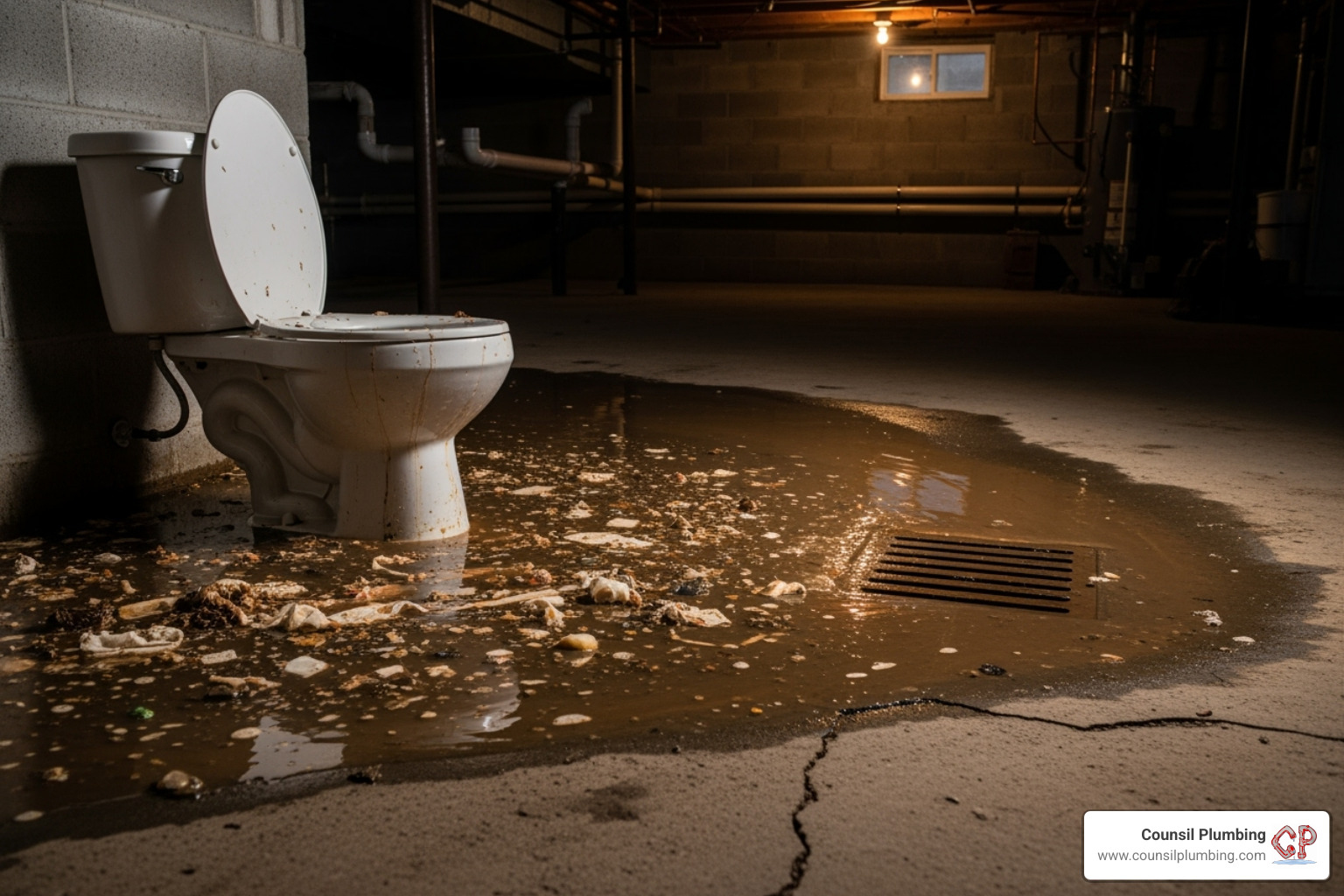
Understanding Main Line Blockage: Your Home’s Hidden Plumbing Emergency
A main line blockage is a serious plumbing emergency where your home’s primary sewer pipe becomes obstructed, potentially causing raw sewage to back up into your home. Unlike a simple clog affecting one drain, a main line issue impacts your entire plumbing system, as all branch drains lead to this central pipe.
Common signs of a main line blockage include:
- Multiple drains backing up simultaneously
- Gurgling sounds from toilets and drains
- Water backing up in shower when toilet is flushed
- Foul sewage odors from drains
- Slow draining throughout the house
- Water pooling in your yard
Most common causes:
- Tree roots infiltrating pipes
- Grease and debris buildup
- “Flushable” wipes and foreign objects
- Broken or collapsed pipes
- Pipe bellying or misalignment
This isn’t just an inconvenience—it’s a plumbing emergency that can quickly become a serious health hazard.
I’m Mike Counsil, and with over 30 years of plumbing experience in San Jose and the South Bay, I’ve seen the immense stress a main line blockage causes. My team has helped thousands of homeowners spot the warning signs and prevent costly disasters.
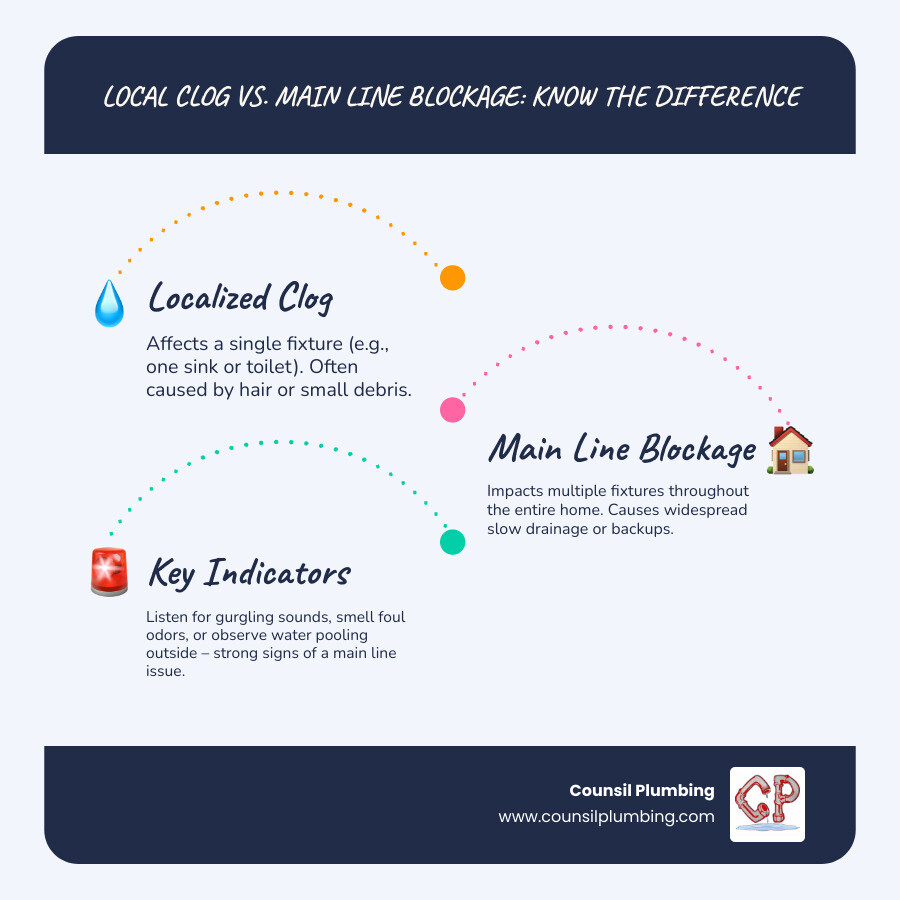
Is It a Simple Clog or a Main Line Crisis?
A slow sink is one thing, but when multiple drains act up, you might have a main line blockage. Telling the difference between a simple clog and a major plumbing crisis is crucial to avoid bigger problems and expenses down the road.
When a main line blockage strikes, it affects every fixture in your home. Since all wastewater funnels into this single pipe, a blockage here is a system-wide problem. If you’re having issues whenever you run any water, that’s a strong indicator.
Here are the common warning signs that scream “main line blockage”:
- Multiple Slow Drains: If several fixtures are draining slowly at once, the problem isn’t an individual clog but an issue in the main line affecting the whole system.
- Gurgling Sounds: Have you ever flushed a toilet and heard a gurgle from your shower drain? These sounds mean trapped air is escaping as water struggles to pass a blockage in your drain, waste, and vent (DWV) system.
- Foul Odors: Unpleasant, sewage-like smells from multiple drains are a clear sign that wastewater is sitting stagnant in your pipes instead of flowing away, causing foul-smelling gases to escape.
- Fixture Chain Reactions: If running the washing machine makes your toilet overflow, you have a main line problem. With the main line blocked, wastewater seeks the easiest exit, pushing back up into the lowest drains in your home.
- Water Pooling or a Soggy Yard: Wet spots or standing water in your yard near the sewer line’s path can indicate a severe break or clog in the underground pipe, requiring immediate attention.
Differentiating a Localized Clog vs. a Main Line Blockage
Understanding the difference is key to saving time and money. It’s all about scope.
| Feature | Localized Drain Clog | Main Line Blockage |
|---|---|---|
| Affected Fixtures | Usually affects only one fixture (e.g., one sink, one toilet). | Affects multiple fixtures throughout the house, especially those on lower levels. |
| Symptoms | Slow drain, standing water in one fixture, plunger often works. | Multiple slow drains, gurgling sounds from various drains, water backing up in other fixtures (e.g., toilet into shower), foul odors. |
| Cause | Hair, grease, food particles, small objects in a single branch line. | Tree roots, significant grease/waste buildup, “flushable” wipes, foreign objects, structural pipe damage. |
| DIY Potential | High. Often cleared with a plunger, baking soda/vinegar, or small snake. | Low to moderate. Requires specialized tools (auger) and knowledge; often needs professional intervention. |
| Urgency | Annoying, but not usually an immediate emergency. | High. Can lead to raw sewage backup, health hazards, and significant property damage. |
The Serious Consequences of Ignoring the Signs
Ignoring a main line blockage can lead to catastrophic consequences:
- Water Damage and Structural Issues: Raw sewage backups can ruin floors, walls, and furniture, leading to expensive repairs and even damaging your home’s foundation over time.
- Mold Growth: The moisture from backups creates a perfect environment for mold, which spreads quickly, damages your home, and poses health risks, especially for those with allergies or respiratory issues.
- Raw Sewage Exposure and Health Risks: Raw sewage contains harmful bacteria and viruses that can cause serious illnesses. According to studies on Drainage Systems, an Occluded Source of Sanitation Related Outbreaks, exposure is a major health hazard. Cleanup is dangerous and best left to professionals.
- Expensive Repairs: A simple drain clearing might cost $100-$500, but a main line blockage is more complex. Basic clearing can range from $100-$250, but issues like roots or pipe damage can escalate costs to over $1,000 for excavation. Waiting only makes the problem more expensive to fix.
We understand that plumbing issues are stressful, but addressing these problems promptly is key. For more information on how we help protect older homes, you can visit our guide on How Local Plumbing Experts Help Protect Older Homes. For general plumbing services, check out More info about General Plumbing services.
What Causes a Main Line Blockage?
Knowing what causes a main line blockage is key to clearing it and preventing it from happening again. Based on our decades of experience in the San Jose area, several common culprits are behind a blocked sewer line.
Your home’s main sewer line is designed to handle all household wastewater, but certain factors can disrupt its flow. These blockages can occur gradually or, in some cases, quite suddenly.
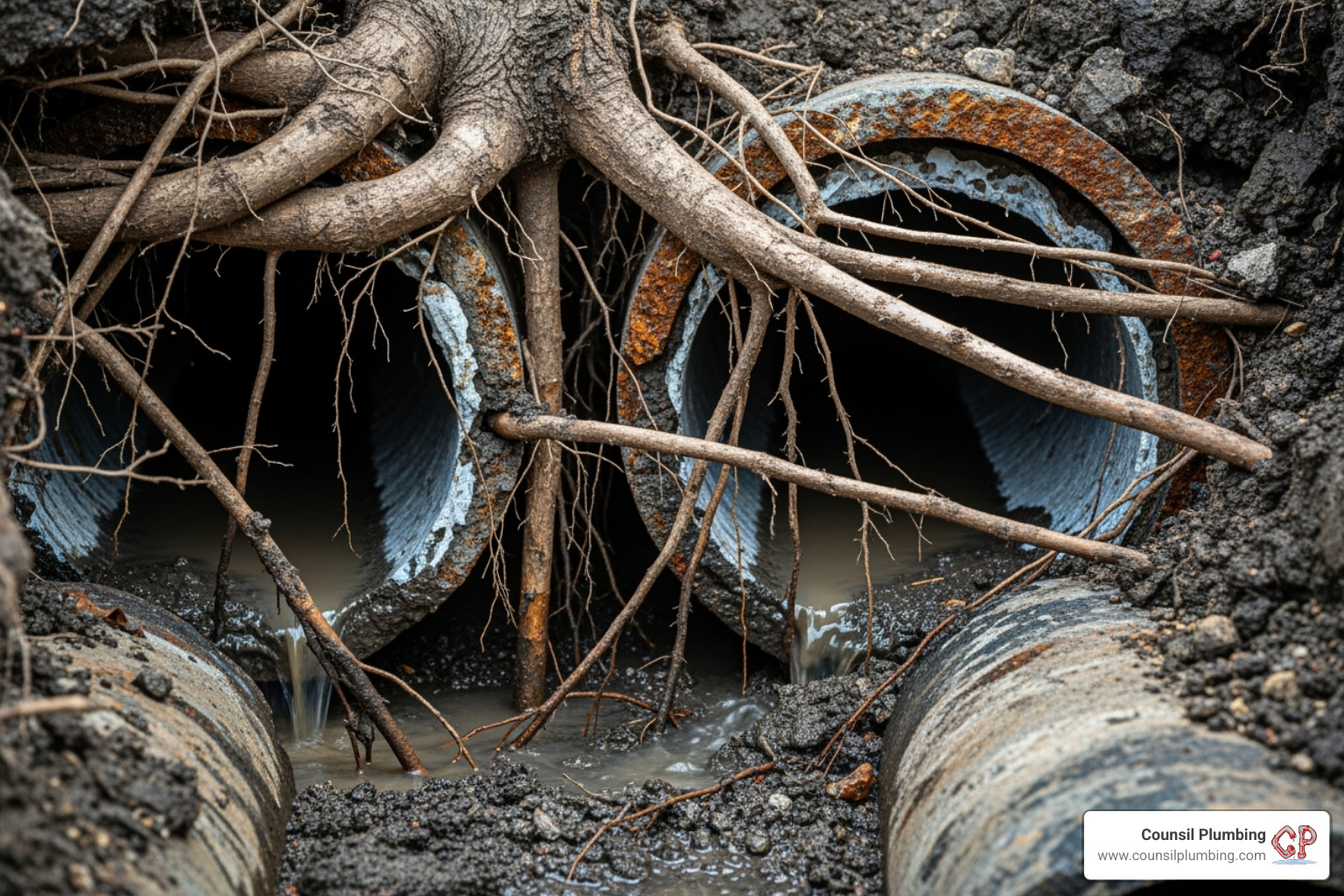
The #1 Culprit: Invasive Tree Roots
If you have mature trees or an older home, tree roots are a primary suspect in a main line blockage. Trees constantly seek moisture, and your sewer line is a perfect source.
Tree roots can infiltrate older sewer pipes, especially those made of clay, through tiny cracks or loose joints. Once inside, they grow into a dense mass that acts like a net, catching grease, wipes, and other debris, eventually forming a formidable obstruction. A professional-grade mechanical auger can shave roots down to the pipe walls to restore flow, but significant root intrusion requires professional intervention, as standard DIY tools are ineffective against them.
Everyday Buildup and Foreign Objects
What goes down your drain can come back to haunt you. Many main household drain clogs are caused by human error.
- Grease and Fats: When hot liquid grease or oil is poured down the drain, it cools and solidifies inside your pipes. This sticky buildup narrows the pipe and traps other debris, creating stubborn clogs that are difficult and costly to remove.
- “Flushable” Wipes and Hygiene Products: Despite the name, “flushable” wipes don’t break down like toilet paper and are a primary cause of tough clogs. Never flush wipes, feminine hygiene products, cotton swabs, dental floss, or paper towels, as they don’t dissolve and will lead to a severe main line blockage.
- Food Waste: Garbage disposals can’t handle everything. Large amounts of fibrous food scraps like potato peels, eggshells, and coffee grounds can accumulate in your pipes, contributing to a stubborn clog.
- Soap Scum and Hair: In showers, soap scum and hair combine into sticky masses. While often causing localized clogs, a significant amount can reach the main line and contribute to a blockage.
- Foreign Objects: Kids’ toys or anything accidentally dropped in a toilet can become lodged in the main line, creating an immediate obstruction.
Structural Pipe Damage
Sometimes, the problem isn’t what’s inside the pipe, but the pipe itself. Your main sewer line is susceptible to external forces and age-related deterioration.
- Broken or Collapsed Pipes: Older cast iron and clay pipes are more prone to damage than modern PVC. Shifting soil, temperature changes, or heavy traffic can cause pipes to crack or collapse, creating an immediate blockage and allowing soil to enter the line.
- Bellied or Sagging Pipes: A “bellied” pipe is a sunken section of the sewer line, often caused by unstable soil. This dip collects waste and water, preventing proper flow and leading to recurring blockages.
- Misaligned Connections: Over time, pipe sections can shift and become misaligned at the joints. This creates uneven surfaces where debris can snag and build up, causing a blockage.
Addressing these structural issues often requires professional assessment, including video camera inspections. We offer comprehensive solutions for your home’s water lines, including repair and replacement services. Learn more at More info about Water Line Repair & Replacement.
Your Action Plan: Clearing the Clog
If you suspect a main line blockage, don’t panic. First, stop using all water to prevent further backup. This guide covers what you can safely try yourself and when to call a professional. Always wear heavy-duty work gloves and eye protection for any DIY attempt.
DIY Fixes for a Minor Main Line Blockage
While a full-blown main line blockage usually needs expert help, you can try a few methods for minor issues if you have an accessible sewer clean-out.
Before you begin, gather these tools:
- A sturdy pipe wrench
- A professional-grade auger (plumbing snake), which can be rented
- Heavy-duty work gloves and eye protection
- A garden hose and a bucket
Here are a few DIY methods to consider, always with caution:
- Hot Water Flush: For minor grease clogs, slowly pour a pot of hot (not boiling, which can damage PVC) water down the drain. This is rarely effective for a true main line blockage.
- Baking Soda and Vinegar: A mix of 1/3 cup baking soda and 1/3 cup vinegar can break down minor organic clogs. Pour it down the drain, let it sit for an hour, then flush with hot water. This is not a solution for a major main line blockage.
- Wet/Dry Vacuum Power: For a clog near a clean-out or floor drain, a powerful wet/dry vacuum might suction out the debris. Ensure a tight seal around the vacuum hose.
- Using a Sewer Auger (Plumbing Snake) via the Clean-Out: This is the most effective DIY method but requires caution. First, locate your sewer clean-out (a capped pipe in your basement, garage, or outside). Warning: Wastewater may be under pressure. Slowly loosen the cap with a pipe wrench. If water gushes out, STOP and call a professional immediately. If it’s safe, feed the auger cable into the pipe until you feel resistance, then run the auger to break up the clog. Flush the line with a garden hose before retracting the auger and securely replacing the cap.
A Critical Warning on Chemical Drain Cleaners!
We strongly advise against using chemical drain cleaners for a main line blockage. They are rarely effective, can damage your pipes (especially PVC), and pose a serious safety hazard. If they fail, the trapped chemicals make the job more dangerous for a professional.
When to Call a Professional Plumber
A main line blockage often requires professional expertise. It’s time to call the pros at Counsil Plumbing if:
- Your DIY attempts fail or the clog quickly returns.
- You suspect tree root intrusion or pipe damage.
- You have raw sewage backing up into your home (a health hazard).
- You see water pooling in your yard near the sewer line.
- You’re not comfortable or confident with the DIY methods.
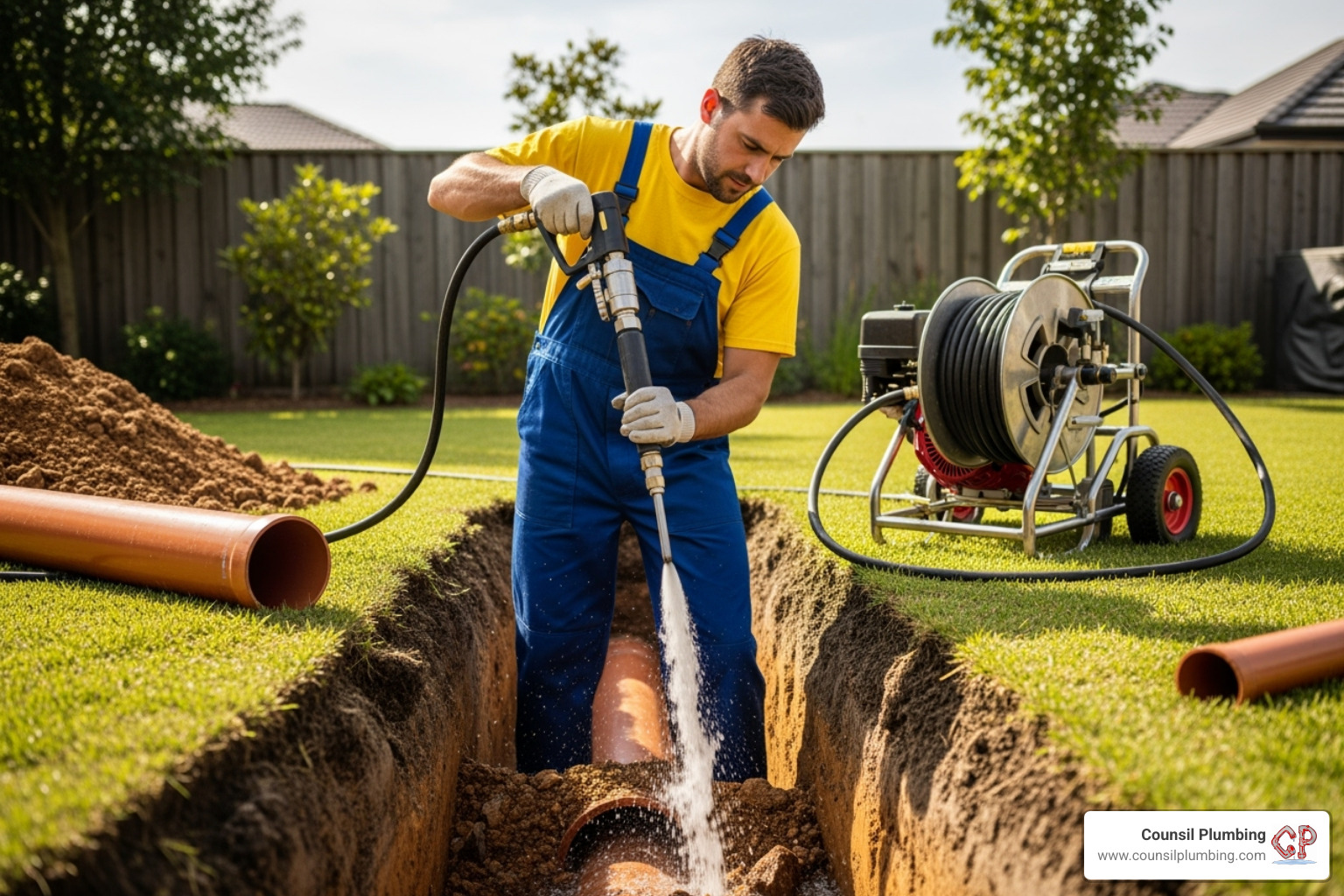
When you call the Mike Counsil Plumbing team, we arrive with the right tools and expertise for your main line blockage. We serve San Jose, Cupertino, Los Altos, Los Gatos, Saratoga, Sunnyvale, Monte Sereno, Campbell, Willow Glen, and Cambrian Park, California with:
- Video Camera Inspection: We use a high-resolution camera to see inside your pipes, pinpointing the exact cause and location of the clog without guesswork.
- Mechanical Augers/Rooters: For tough clogs like invasive tree roots, our powerful, professional-grade augers have specialized blades that clear what DIY snakes can’t.
- Hydro-Jetting: This highly effective method uses high-pressure water to blast away grease, scale, and roots, leaving pipes thoroughly clean. While the national average cost for hydro jetting can be around $475, it’s often the most thorough and long-lasting solution.
When you choose Counsil Plumbing, you’re investing in a lasting solution. For all your sewer line needs, visit our dedicated page for More info about Sewer Lines.
Long-Term Prevention Strategies
Now that your drain is clear, let’s focus on prevention. Proactive maintenance is the best way to avoid another messy and expensive main line blockage. A few smart habits can protect your home’s plumbing and your wallet.
Smart Habits for Healthy Drains
Many clogs that lead to a main line blockage are caused by everyday habits, which means they are preventable.
Start in the kitchen with proper grease disposal. Never pour cooking oil, grease, or fats down the sink. They solidify in pipes, causing stubborn blockages. Pour cooled grease into a container and throw it in the trash.
In the bathroom, remember what not to flush. Only flush human waste and toilet paper. “Flushable” wipes do not break down and are a primary cause of main line blockages. Keep paper towels, feminine hygiene products, cotton swabs, floss, and diapers out of the toilet, as they don’t dissolve and will cause clogs.
Be mindful of your garbage disposal use. It’s best for small, soft food scraps. Avoid fibrous items like potato peels, coffee grounds, and eggshells. Always run plenty of cold water while the disposal is on to help flush material through the pipes.
For regular maintenance, use drain guards or hair catchers in showers and tubs to stop clogs before they start. You can also do a monthly drain flush by filling sinks with hot water and then letting it rush out to clear minor buildup.
Preventing a Future Main Line Blockage with Inspections
Even with good habits, issues like tree root intrusion or aging pipes can occur. This is where professional inspections provide peace of mind.
We highly recommend camera inspections for your sewer lines, especially if your home is over 25 years old or has mature trees. A camera allows us to see inside your pipes and spot potential trouble like small cracks or early root growth. Catching these issues early can save you from a future main line blockage.
If your home is prone to clogs, regular professional cleanouts can prevent major backups. For homes with a septic system, regular septic system maintenance is vital. Pumping every three to five years is crucial to prevent backups. You can learn more from the EPA’s guide on How Your Septic System Works.
A little proactive effort brings immense peace of mind and significant cost savings. Preventing a problem is always cheaper and less stressful than an emergency. Learn more about the benefits by reading our guide on Why Annual Plumbing Inspections Save You Money.
Conclusion
We’ve covered the key signs of a main line blockage—from multiple slow drains to sewage backup—and its common causes like tree roots and grease. While some minor clogs can be a DIY fix, major blockages require professional tools and expertise for your safety.
The best strategy is always prevention. Smart habits like proper grease disposal and being mindful of what you flush, combined with regular professional inspections, are your best defense against a costly main line blockage and plumbing emergency. Think of it as a wellness check-up for your home’s most vital artery!
At Counsil Plumbing, we’re your partners in maintaining a healthy home. With 30+ years of trusted experience, 800+ five-star reviews, and a 100% satisfaction guarantee, we deliver peace of mind across the South Bay Area. We offer 24/7 emergency service with a rapid 90-minute response time in San Jose, Cupertino, Los Altos, Los Gatos, Saratoga, Sunnyvale, Monte Sereno, Campbell, Willow Glen, and Cambrian Park.
Don’t let the thought of a main line blockage keep you up at night. If you suspect a problem, or simply want to ensure your plumbing is in top shape, we’re always here to help.