
Why Water Leaks Are More Serious Than Most Homeowners Think
A water leak in house can start small but quickly spiral into a costly disaster. Here’s what to watch for:
Quick Answer: Common Signs of a Water Leak in Your House
- Increased water bills without explanation
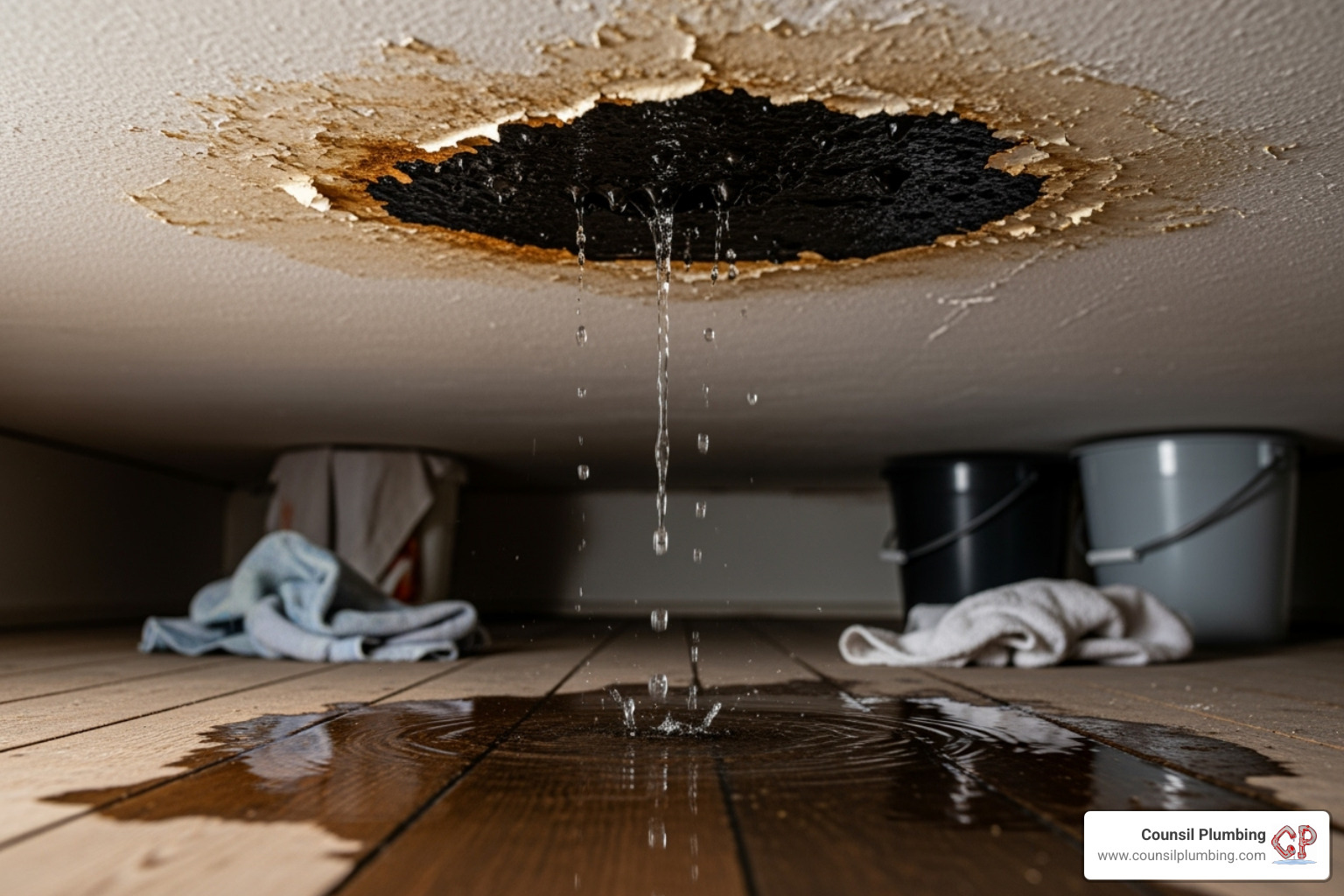
- Water stains on ceilings, walls, or floors
- Musty odors or visible mold growth
- Peeling paint or warped wallpaper
- Dripping sounds inside walls
- Wet spots on floors or carpets
- Reduced water pressure throughout the home
- Puddles near appliances or fixtures
A sudden leak is a cause for panic for good reason. A tiny crack in a supply line can release over 200 gallons of water in a day. The average household wastes 10,000 gallons yearly from leaks, with repair costs averaging $2,500. In severe cases, just one inch of water can lead to $25,000 in damages.
Beyond the financial hit, leaks pose serious health risks. Water damage allows mold to grow within 48 hours, triggering respiratory problems, allergies, and asthma. The hidden danger is that most leaks go undetected for months, lurking behind walls or under floors, silently destroying your home’s structure and inflating your water bill. By the time you notice, the damage is often extensive.
I’m Mike Counsil, and in my 30+ years as a plumber in the South Bay, I’ve seen minor leaks become major crises. My team at Counsil Plumbing has helped thousands of San Jose homeowners find and fix leaks before they cause serious damage, and I’m here to show you how.

The Unseen Dangers: Why You Can’t Ignore a Water Leak
Hidden water leak in house problems work against you every day. Like termites, by the time you see the damage, they’ve been quietly destroying your home for months.
Structural damage starts small but spreads fast as water soaks into drywall, wood framing, and insulation. These materials weaken, causing ceilings to sag, floors to warp, and walls to lose integrity. If the leak is under your home, it can compromise your foundation, leading to repairs that can cost tens of thousands of dollars. As we explain in our article on The Cost of Ignoring a Water Leak: Why Leak Detection Services Save You Money, early detection is the key to avoiding a financial nightmare.
Even worse are the health hazards from mold. Mold spores are always present, but they activate with moisture in as little as 48 hours. That black, fuzzy growth isn’t just ugly; it releases spores into the air you breathe.
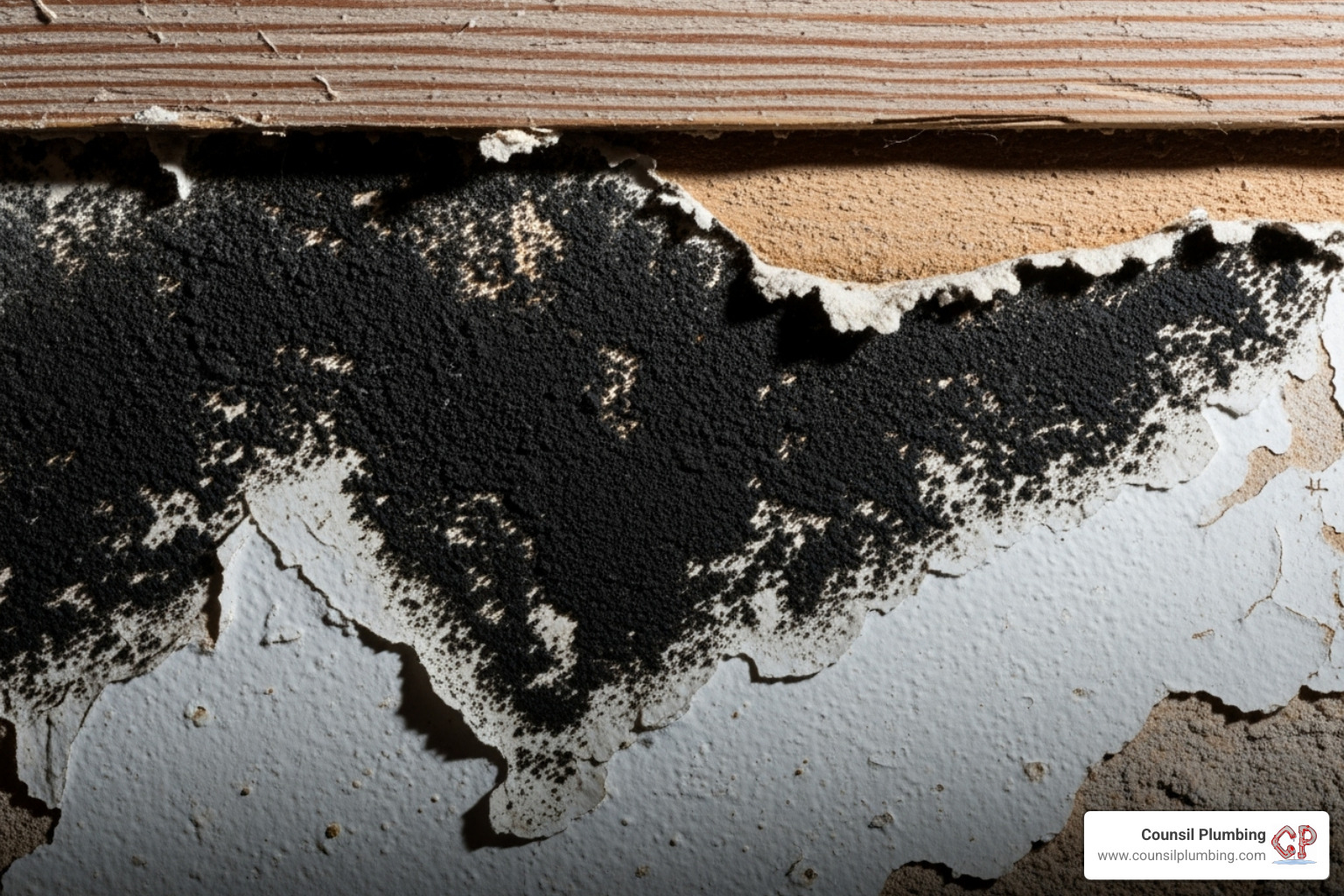
Mold exposure can trigger respiratory problems, allergic reactions, and asthma attacks, with children and the elderly being especially vulnerable. The EPA’s brief guide to mold, moisture, and your home confirms that addressing dampness quickly is essential for your family’s health.
Then there are the increased utility bills. A tiny drip—one drop per second—wastes over 10,000 liters of water a year. Alarmingly, 10% of homes have leaks wasting over 340 liters daily. Over time, this adds up to hundreds or thousands in wasted water costs, not including the eventual repair bills for the damage that water has been causing.
An ignored water leak is a ticking time bomb threatening your home’s structure, your family’s health, and your financial security.
Emergency Action Plan: What to Do When You Find a Leak
The moment you find a water leak in house, don’t panic. Taking quick, decisive action can prevent a catastrophe. Follow this plan to protect your home and wallet.
First, stop the water at its source. Locate and shut off your main water valve immediately. It’s usually where the main water line enters your home—often in the basement, crawl space, or near the water heater. If you don’t know where it is, find it today and mark it with a bright tag so anyone can find it in a crisis.
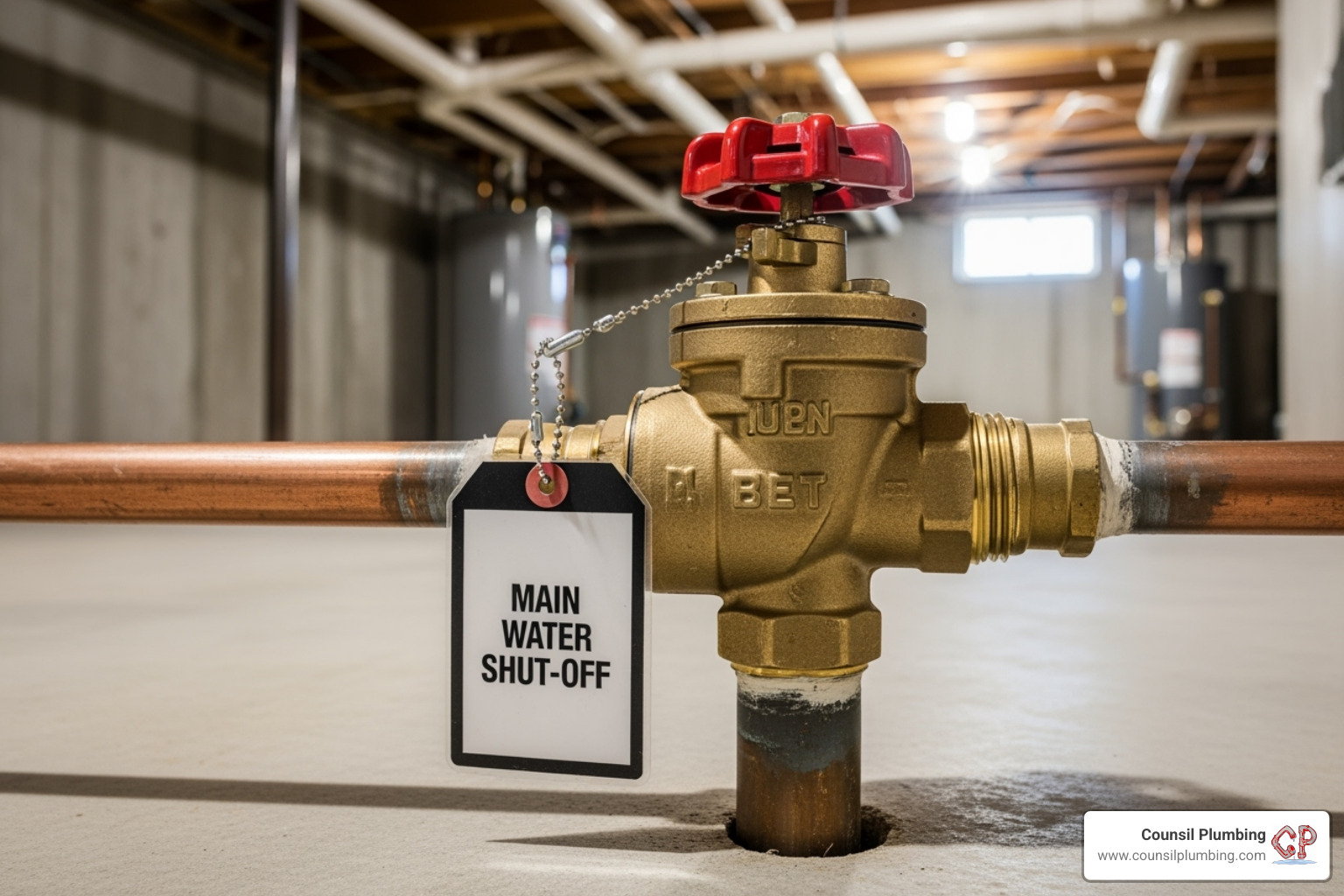
Pro tip: Test the valve twice a year to ensure it isn’t stuck. A valve that won’t turn during an emergency is a major problem. If it’s frozen, call a plumber before you have a leak.
Once the water is off, contain the damage. Place buckets under drips and use towels or mops to soak up standing water. Move furniture, electronics, and other valuables away from the affected area. If water is pooling on a hard floor, use a squeegee to push it outside.
Before cleaning, document everything. Pull out your phone and take photos and videos of the leak, the water damage, and any affected belongings. This documentation is essential for your insurance claim.
Now, call in the professionals. While some leaks seem manageable, a burst pipe, a hidden source, or a sewer backup requires immediate expert attention. Sewage is toxic and is never a DIY situation.
At Counsil Plumbing, we know emergencies don’t wait. That’s why we offer Emergency Water Line Services: What to Do When You Spot a Serious Leak with 24/7 availability and a 90-minute response time throughout San Jose and the South Bay Area, including Cupertino, Los Altos, Los Gatos, Saratoga, Sunnyvale, Monte Sereno, Campbell, Willow Glen, and Cambrian Park. When you’re facing a water leak in house emergency, we’ll be there fast.
How to Detect a Hidden Water Leak in Your House
The trickiest leaks are the ones you can’t see, causing thousands in damage before you know there’s a problem. Don’t wait for a puddle; be proactive.
At Counsil Plumbing, we use non-destructive equipment like acoustic listening devices to hear water moving in pipes and infrared cameras to detect hidden moisture. These tools help us pinpoint leaks without tearing up your home.
But you can start your own investigation. If you find something, we’re here to help with Water Line Repair & Replacement services.
Check Your Water Meter
Your water meter is your best free leak detector. Here’s how to use it:
- Turn off all water in your home—faucets, toilets, appliances, and irrigation.
- Locate your meter (usually in a basement, crawlspace, or outside box) and note the reading. Look for a small red triangle or gear, the low-flow indicator.
- Wait 15-30 minutes without using any water.
- Check the meter again. If the dial has moved or the low-flow indicator is spinning, you have a leak.
This test confirms a leak exists, which is the first step to solving the problem. 10% of homes have leaks wasting over 340 liters of water daily.
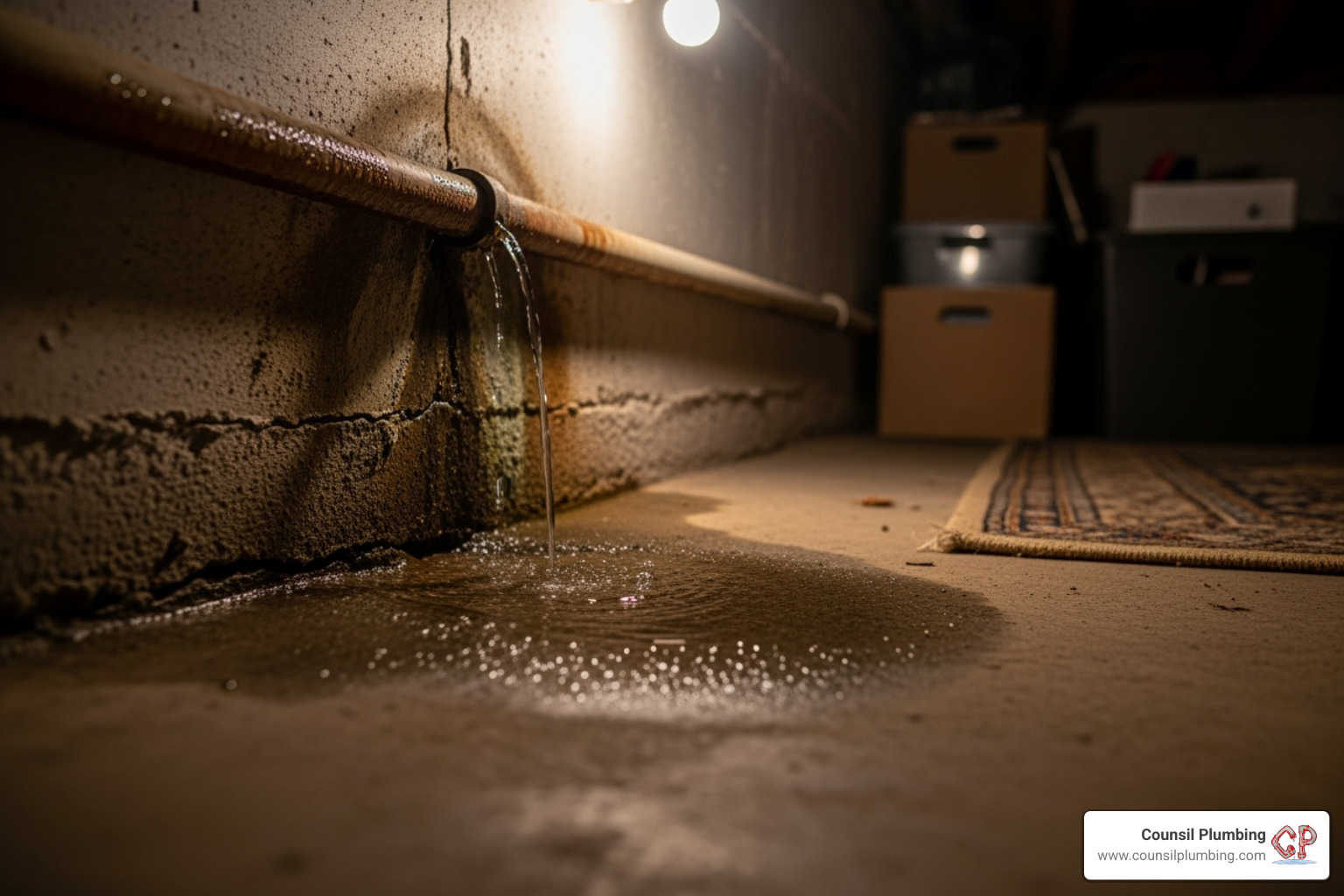
Signs of a Water Leak in House Walls
Your home often gives clues about hidden wall leaks:
- Peeling paint or warped drywall: Water softens and swells drywall, causing paint to bubble and wallpaper to peel. The wall may feel spongy.
- Musty odors: A damp, earthy smell often indicates mold growing behind your walls.
- Discoloration and stains: Look for yellowish or brownish stains on walls or ceilings that grow over time.
- Dripping sounds: A steady “drip, drip, drip” inside a wall when no water is running is a clear warning. As Angi explains, this could be a leaky pipe or condensation.
How to Test for Toilet and Faucet Leaks
Toilets and faucets are common culprits but are easy to test.
For toilet leaks, use the dye test. Add a few drops of dark food coloring to the toilet tank and wait 15-30 minutes without flushing. If color appears in the bowl, your flapper valve is likely worn and needs replacing. A leaky toilet can waste a massive amount of water.
Dripping faucets are obvious but costly. A single drip per second wastes over 3,000 gallons a year, as detailed in our article on The Hidden Costs of Leaky Faucets. This often requires a simple fix like a new washer. If you’re not comfortable doing it yourself, our Leaky Faucet Repair services can handle it quickly.
Pinpointing the Source: Common Culprits and Their Causes
Once you confirm a water leak in house, the next step is finding its source. Different leaks have different signatures.
Common plumbing-related leaks include burst pipes, often caused by high water pressure, corrosion in older pipes (30+ years), or freezing. Appliance hose failures for dishwashers, washing machines, and water heaters are also frequent offenders. And don’t forget leaky faucets and running toilets. For help with these issues, our Water Line Services team is ready.
Not all leaks are from plumbing. This table can help you distinguish a roof leak from a plumbing leak:
| Feature | Roof Leak | Plumbing Leak |
|---|---|---|
| Timing | Often appears or worsens during/after rain/snow | Can appear at any time, often constant |
| Water Color | Usually clear or slightly discolored by debris | Can be clear, rusty (from pipes), or sewage-like |
| Location | Often spreads across ceilings, may be high up | More localized, often near fixtures or within walls |
| Consistency | Intermittent, depends on weather | Constant drip or flow |
| Attic Check | Visible water stains, wet insulation in attic | May not show signs in attic unless pipe is there |
Roof, Gutter, and Window Leaks
Sometimes water sneaks in from outside. Roof leaks are a major cause of ceiling damage, often due to damaged shingles, improper flashing around chimneys or vents, or storm damage. If a ceiling leak worsens with rain, your roof is the likely source.
Clogged gutters cause water to overflow and seep into walls. In cold climates, this can lead to ice dams, where water backs up under shingles and into your home.
Window leaks are also common. Worn seals, cracked caulking, and deteriorated frames can let water in. Look for condensation between panes or water stains around the frame. As explained in How Does Water Leak Into My House?, maintaining exterior caulking is key.
Finding a Water Leak in House Foundation or Basement
Foundation and basement leaks are serious threats to your home’s stability. They can be caused by foundation cracks from settling or hydrostatic pressure from groundwater pushing against the walls.
Key signs to watch for:
- Puddles on your basement floor.
- Damp walls that feel wet, especially after rain.
- Efflorescence, a white, powdery substance on concrete walls left by evaporating water.
- A persistent musty odor, indicating mold and mildew.
Other causes include poor grading (ground sloping toward the house) and sump pump failure. If you suspect a foundation leak, it’s not a DIY job. Our team at Counsil Plumbing has fixed complex foundation and basement leaks throughout Los Gatos, Saratoga, and the entire South Bay Area.
After the Drip: Mold Prevention and Long-Term Solutions
Stopping a water leak in house is only half the battle. What you do next prevents further damage and health issues.
Drying Process and Mold Prevention
Time is your enemy. Mold can grow within 24 to 48 hours of water exposure.
- Remove all standing water immediately with mops, towels, or a wet vacuum.
- Create air circulation. Open windows and use fans to blow on wet areas to speed up drying.
- Use dehumidifiers. Run them continuously in affected rooms to pull moisture from the air and materials.
Check hidden areas like behind baseboards and under carpets. Don’t replace drywall or flooring until you are certain everything is completely dry. If you see or smell mold, call for professional mold remediation. This is not a DIY task, as mold spores can spread and cause serious respiratory problems.
Preventing Future Leaks
Most leaks are preventable with regular maintenance.
- Schedule annual plumbing inspections. A professional can spot aging pipes, worn seals, and other early signs of trouble. Our article on Why Annual Plumbing Inspections Save You Money explains the benefits.
- Insulate your pipes, especially in unheated areas like basements and attics, to prevent them from bursting in freezing temperatures.
- Upgrade to water-efficient fixtures. The EPA’s WaterSense models reduce strain on your plumbing and lower your water bills.
- Check appliance hoses every few months for wear. Replace rubber hoses every 3-5 years, or upgrade to more durable braided stainless steel hoses.
- Maintain your home’s exterior. Clean your gutters regularly and inspect your roof for damage.
A little vigilance today can save you from massive repair bills tomorrow.
Frequently Asked Questions about House Water Leaks
How can I tell if a ceiling leak is from the roof or plumbing?
Distinguishing the source is key. Check these clues:
- Timing: If the leak appears or worsens with rain, it’s likely the roof. If it’s constant regardless of weather, suspect plumbing.
- Water Color: Roof leaks are usually clear. Plumbing leaks can be clear, rusty (from pipes), or foul-smelling (from a drain line).
- Location: Plumbing leaks often appear below an upstairs bathroom. Roof leaks can appear far from the entry point as water travels along joists.
- Attic Check: If it’s safe, look in your attic for wet insulation or stains on the roof decking. If the attic is dry but the leak persists, it’s likely plumbing. As we cover in our Emergency Water Line Services: What to Do When You Spot a Serious Leak guide, finding the source quickly is critical.
How much does a small leak really cost?
“Small” leaks are deceptively expensive. The average household wastes about 10,000 gallons of water annually from leaks. A single tap dripping once per second wastes over 2,600 gallons a year.
A tiny 1/16-inch hole in a pipe can waste over 3,500 liters a day. The cost of water damage repairs averages $2,500, but if a leak goes unnoticed, just an inch of water may result in repairs of up to $25,000. That doesn’t include mold remediation.
That “small” leak isn’t small when you factor in water waste, structural damage, and health hazards. As we detail in The Hidden Costs of Leaky Faucets, acting fast is the smartest financial move.
Can I fix a water leak myself?
While fixing a dripping faucet washer or toilet flapper can be a satisfying DIY project, most water leak in house scenarios are best left to a professional. I’ve seen many DIY attempts turn into costly disasters.
Plumbing is complex. A simple-looking leak might be a symptom of a larger issue like high water pressure or widespread corrosion. The risks of DIY include:
- Incorrect diagnosis: Fixing the wrong thing while the real problem continues.
- Safety hazards: Dealing with pressurized water lines and nearby electrical systems.
- Further damage: Improper repairs can make the leak worse.
- Missing hidden issues: You can’t see water damage inside walls without specialized equipment.
Professional plumbers have the training and tools to diagnose and fix leaks correctly the first time. For anything beyond a simple drip, our Water Line Repair & Replacement and Leaky Faucet Repair services ensure the job is done safely. A service call today can save you thousands tomorrow.
Protect Your Home from Water Damage
If there’s one takeaway, it’s this: a water leak in house situation is never a small problem. It’s an urgent issue that demands immediate attention.
You now know the warning signs, how to act in an emergency, and how to detect hidden problems. You also know that proper drying and preventative maintenance are key to avoiding costly mold and structural damage. But knowledge is only half the battle; you also need a trusted partner who can respond fast.
At Counsil Plumbing, we’ve spent over 30 years helping families in San Jose and the South Bay protect their homes. Our 800+ five-star reviews reflect our commitment to showing up for our customers. With a 90-minute response time and 24/7 availability, we’re here for you.
We serve the entire South Bay Area, including Cupertino, Los Altos, Los Gatos, Saratoga, Sunnyvale, Monte Sereno, Campbell, Willow Glen, and Cambrian Park. Every job comes with our 100% satisfaction guarantee, because your peace of mind is our priority.
Don’t wait for a small leak to become a $25,000 disaster. If you suspect a leak or want the confidence of a professional inspection, we’re ready to help.
Contact us for expert water line services today. Let’s protect your home together.